

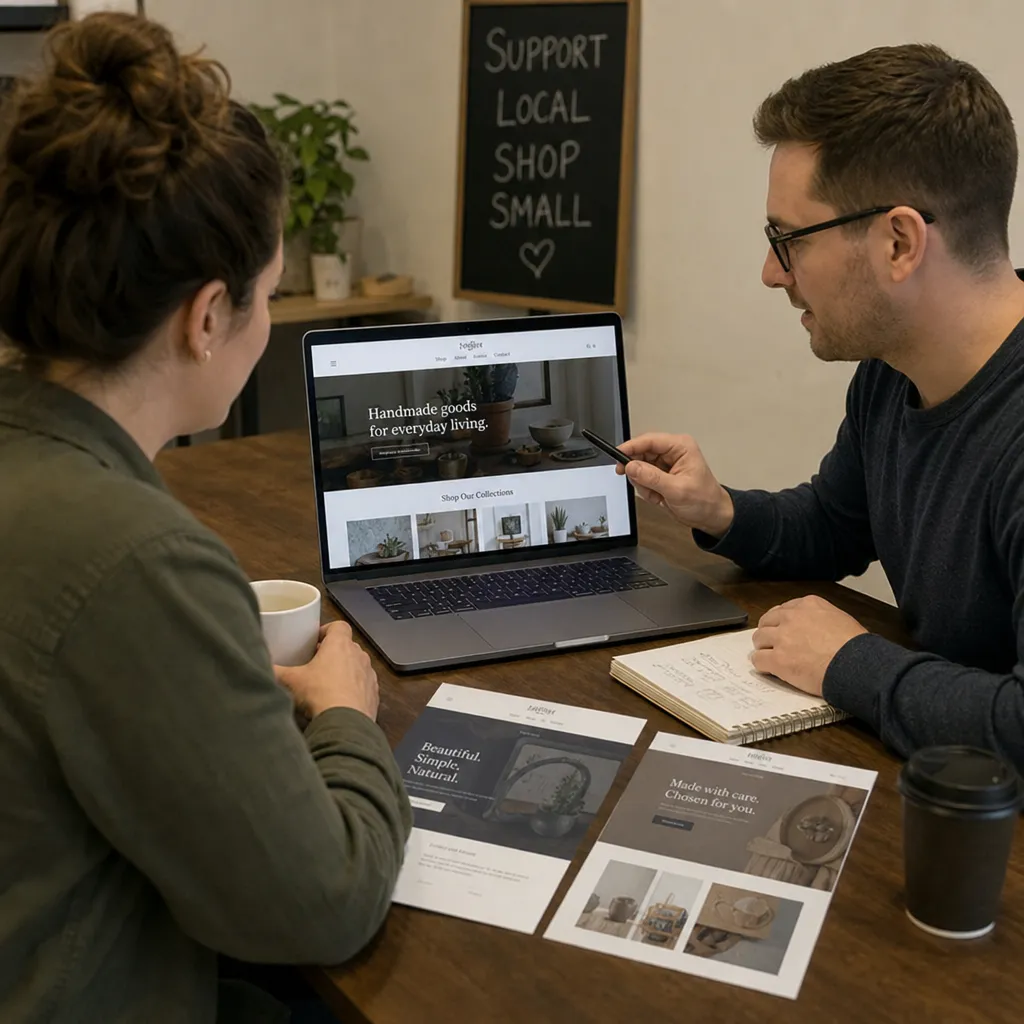
How do I know if local web designers near me are actually good?
You can tell whether local web designers near me are worth considering by looking for proof of fit, not just attractive screenshots. A strong designer or web design agency should understand your goals, explain their process clearly, show relevant work, and connect design choices to practical outcomes such as calls, bookings, quote requests, store visits, or online sales.
Start with their portfolio, but do not stop there. A website can look beautiful and still fail if it loads slowly, buries key information, or gives local customers no reason to act. Ask how each project supported the client’s business model. For example, a restaurant site may need menus, reservations, local SEO, and mobile-first navigation, while a contractor may need service pages, trust signals, quote forms, and project galleries.
Good local web design also depends on communication. Local providers often have an advantage because they understand nearby competitors, regional customer expectations, and the way people search for services in your area. That does not mean every local designer is the best choice, but it does mean you should ask how they would position your business for your specific market rather than accepting a generic template pitch.
What strong small business web design should include
Small business web design should be built around clarity, usability, and growth. Your site needs to help real people understand what you offer, why they should trust you, and what to do next. Custom web design is valuable when it supports those goals instead of adding unnecessary complexity.
At a minimum, most small businesses should expect a responsive website that works well on phones, tablets, and desktops. Many local searches happen when people are ready to call, visit, compare, or book, so mobile experience matters. Buttons should be easy to tap, contact details should be obvious, and pages should load without making visitors wait.
A capable web design agency or freelancer may offer several connected services:
- Discovery and strategy: Clarifying your audience, goals, services, competitors, and conversion priorities before design begins.
- Custom web design: Creating layouts, visuals, and page structures that fit your brand rather than forcing your business into a rigid template.
- Content support: Helping organize, edit, or write website copy so visitors quickly understand your value.
- Local SEO basics: Structuring pages, headings, metadata, internal links, and location-focused content so search engines can understand your business.
- Branding alignment: Applying colors, typography, imagery, and messaging consistently across the site.
- E-commerce or booking features: Adding online sales, appointment scheduling, quote forms, or integrations when they support the customer journey.
- Maintenance and support: Updating software, fixing issues, refreshing content, and monitoring site health after launch.
Not every business needs every service. A new solo service provider may need a simple lead-generation site, while an established local company may need a larger redesign with SEO, content planning, and ongoing support. The best provider will help you prioritize instead of selling everything at once.
Local expertise can make the website more relevant
Local web design is not only about being physically nearby. It is about understanding how customers in your area compare options, what language they use, and what trust signals they expect. A designer familiar with local markets may notice details that a distant vendor misses, such as neighborhood references, seasonal demand, regional service areas, or local competitor patterns.
This matters most when your website is meant to generate local leads. A generic homepage that says “quality service you can trust” will not work as hard as a site that clearly explains your service area, specialties, process, and reasons to choose your business. Local customers usually want confidence quickly. They may look for reviews, photos, proof of experience, service details, financing information, parking details, or clear next steps depending on your industry.
Local expertise also helps with search intent. If your business serves multiple towns, neighborhoods, or counties, your site may need carefully planned service pages rather than one broad page trying to rank for everything. A thoughtful designer will not promise instant rankings, but they should understand how site structure, content, and technical quality support visibility.
A practical checklist for choosing a web design agency
Picking a web design agency is easier when you compare each candidate against the same criteria. Use the checklist below during consultations so you can separate polished sales talk from real capability.
- Review relevant portfolio work. Look for projects similar in size, complexity, or industry needs to yours. A designer does not need to have worked in your exact niche, but they should show they can solve similar problems.
- Ask about strategy before visuals. If they jump straight to colors and pages without asking about customers, goals, competitors, and conversion actions, the project may become style-first instead of business-first.
- Check communication habits. Notice how clearly they answer questions, how quickly they follow up, and whether they explain tradeoffs in plain language.
- Request a written proposal. A serious proposal should outline scope, deliverables, responsibilities, timeline assumptions, revision process, payment structure, and what happens after launch.
- Look for SEO-aware thinking. They should discuss site structure, page speed, mobile usability, metadata, content, and local search foundations without making unrealistic guarantees.
- Clarify ownership. Ask who owns the website, content, design files, domain, hosting account, and logins after the project is complete.
- Understand support options. Make sure you know whether maintenance, updates, security monitoring, backups, or content changes are included or billed separately.
- Compare value, not just price. The cheapest quote may leave out strategy, copy, SEO, testing, or support. The highest quote is not automatically the best either.
This process helps you evaluate fit, not just talent. A great designer for one business may be the wrong match for another if their process, communication style, or service model does not align with your needs.
Are affordable web design options reliable?
Affordable web design can be reliable when the scope is clear, expectations are realistic, and the provider is transparent about what is included. Problems usually happen when a low price hides missing services, limited customization, weak content, poor mobile performance, or costly add-ons after the project begins.
There are many legitimate reasons one option may cost less than another. A freelancer may have lower overhead than an agency. A smaller website may require fewer pages and simpler functionality. A template-based build may be appropriate for a young business that needs to launch quickly. The key is to understand what you are trading off.
Before choosing a lower-cost option, ask questions such as:
- Will the design be custom, semi-custom, or template-based?
- How many pages, revisions, and meetings are included?
- Who writes the copy and supplies images?
- Is mobile optimization included from the start?
- Are contact forms, analytics, basic SEO setup, and security included?
- What costs continue after launch, such as hosting, plugins, maintenance, or support?
- What happens if the project takes longer than expected?
A reliable provider will answer these questions directly. If you receive vague promises, unclear deliverables, or pressure to sign without details, keep looking. Affordable should mean focused and efficient, not incomplete or risky.
Pricing models and project scope should be clear
Web design services are usually priced based on the amount of strategy, design, content, development, functionality, and support required. Because every business has different needs, it is safer to compare scope than to chase a universal “normal” price. A simple informational site and a custom e-commerce build are very different projects.
You may see fixed project pricing, hourly pricing, monthly packages, or phased retainers. Fixed pricing can be helpful when the deliverables are well defined. Hourly work may make sense for updates, troubleshooting, or flexible projects. Monthly packages can be useful if you want hosting, maintenance, content updates, and ongoing improvements bundled together.
The proposal should identify what is included and what is not. For example, design and development may be included, while brand photography, advanced copywriting, paid ads, or complex integrations may be separate. Clear boundaries protect both sides. You know what you are buying, and the designer knows what they are responsible for delivering.
A healthy payment structure also matters. Many providers use deposits and milestone payments rather than asking for everything upfront. Whatever the arrangement, make sure payment timing, approval steps, refund terms, and project pauses are documented before work begins.
The best project workflows reduce surprises
A smooth website project follows a process that gives both sides chances to ask questions, review work, and make adjustments. Even a small website benefits from structure. Without a workflow, decisions pile up late in the project and launch becomes stressful.
A typical process may include discovery, planning, sitemap creation, content preparation, design mockups, development, testing, revision, launch, and post-launch support. You do not need to master every technical detail, but you should know when your feedback is needed and what materials you must provide.
During the consultation, ask the designer to walk you through a recent project from start to finish. Listen for how they handled approvals, delays, content gaps, revisions, and testing. This gives you a clearer picture than simply asking, “What is your process?” A confident provider should be able to explain how they guide clients without making the process feel overwhelming.
Post-launch support is part of the decision
A website is not finished forever on launch day. Software updates, content changes, broken links, new services, staff changes, seasonal promotions, and search behavior can all create reasons to adjust the site. Before hiring anyone, ask what support looks like after the site goes live.
Some businesses prefer to make updates themselves. If that is your plan, ask whether training is included and whether the site will be built in a system your team can manage comfortably. Others prefer a maintenance plan so they can request updates without worrying about the technical side.
Support expectations should be specific. Ask how quickly requests are handled, what counts as maintenance versus new work, how backups are managed, and whether performance or security checks are included. A designer who disappears after launch can leave you stuck, even if the initial site looks good.
Key takeaways before you hire
The best local web design partner is the one that understands your business, explains the work clearly, and builds around your customers’ needs. Good design should make your business easier to trust, easier to find, and easier to contact.
Keep these points in mind:
- Choose based on strategy, communication, portfolio relevance, and support—not visuals alone.
- Make sure the proposal defines scope, ownership, payments, revisions, and post-launch responsibilities.
- Affordable web design can be a smart choice when you understand what is included and what is not.
- Local knowledge can improve messaging, service-area content, and customer relevance.
- Small business web design should prioritize mobile usability, clear calls to action, local SEO basics, and long-term maintainability.
If you are comparing local providers now, start by writing down your goals, must-have pages, budget comfort zone, and ideal launch timing. Then speak with a few designers using the same questions so you can compare fairly. The right choice should leave you feeling informed, not pressured—and confident that your website will support the business you are trying to grow.