A strong small business website should do more than look polished. It should explain what you offer, earn trust quickly, work smoothly on mobile, and guide visitors toward enquiries, bookings, calls, or purchases. For Melbourne businesses, the best results usually come from pairing local market understanding with custom web design, SEO-ready structure, and practical support after launch.
What should a small business expect from web design in Melbourne?
A small business should expect a website that reflects its brand, suits its budget, and is built to support real business goals. Good website design Melbourne services typically include clear planning, responsive web design, professional page layouts, basic search visibility foundations, easy content management, and post-launch support options. The right provider will also explain what is included, what costs extra, and how the site can grow as the business grows.
That clarity matters because small businesses often have different needs from larger organisations. A local café may need menus, location details, social proof, and mobile-friendly directions. A trades business may need service pages, suburb targeting, before-and-after images, and prominent click-to-call buttons. A consulting firm may need stronger credibility signals, case-style content, and a more polished lead generation journey.

Local context makes the design more useful
Melbourne web design is not just about choosing colours and adding a contact form. A local audience may compare several providers quickly, skim on mobile, and look for trust cues before making contact. Your website needs to answer those silent questions: Are you nearby? Do you understand my problem? Can I trust you? What should I do next?
A web design agency with local experience can help shape those answers into the structure of the site. That may include suburb-specific service pages, Melbourne-relevant language, locally recognisable photography, or a homepage that immediately explains who the business helps. These details should feel natural, not forced, because users notice when a website sounds generic.
Local design choices can also support local SEO. Page titles, headings, internal links, service descriptions, image alt text, and location signals all help search engines understand what the business offers and where it operates. SEO is not a magic switch, but a properly structured website gives future content and optimisation work a stronger base.
Custom web design turns business goals into user journeys
Custom web design is valuable because it starts with the way your business actually works. Instead of squeezing your offer into a template, the design can be shaped around your customers, services, sales process, and next best action. That is especially useful when you have multiple services, different customer types, or a brand that needs to stand apart from competitors.
For a small business, custom does not have to mean complicated or excessive. It can mean a homepage that prioritises your most profitable services, a contact page that reduces friction, or a navigation menu that matches how customers search. It can also mean choosing the right calls to action: “Request a quote,” “Book a consultation,” “View our work,” or “Call now” all suit different buying moments.
Useful custom design decisions often include:
- Clear service pathways: Visitors should be able to identify the right service quickly without digging through vague menu labels.
- Trust-building content: Reviews, project examples, credentials, team photos, guarantees, or process explanations can reduce hesitation.
- Conversion-focused layouts: Important buttons, forms, phone numbers, and booking links should appear where users naturally need them.
- Brand consistency: Fonts, colours, imagery, and messaging should make the business feel credible and recognisable.
- Room to grow: The site should allow new pages, blog posts, landing pages, or product categories without needing a full rebuild.
The goal is not to make every website unique for the sake of it. The goal is to make the experience more useful, persuasive, and aligned with how your customers decide.
Professional web design is more than appearance
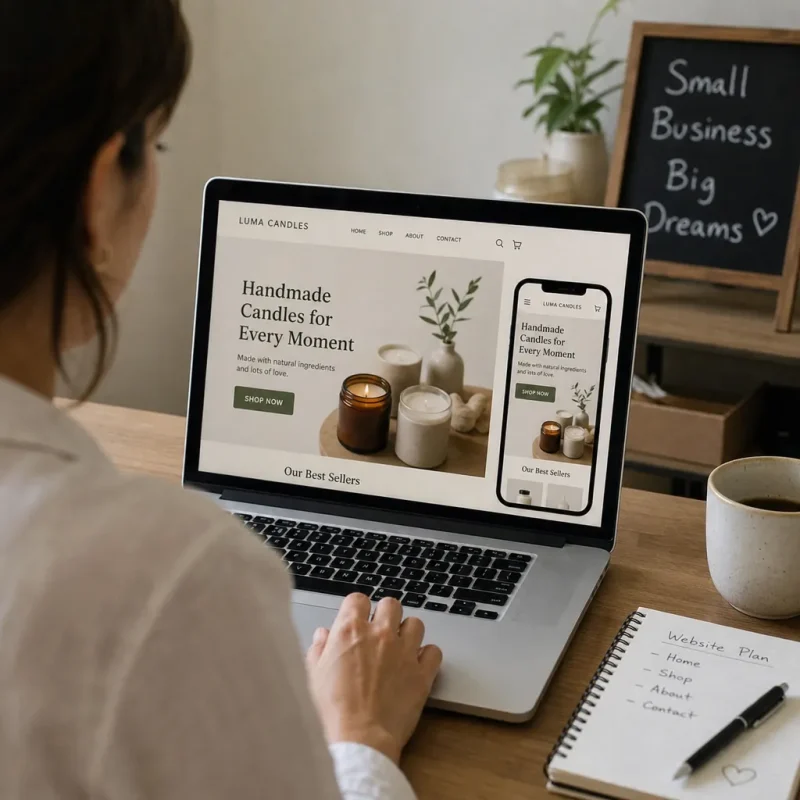
Professional web design combines strategy, structure, writing, visuals, performance, and usability. A site can look beautiful and still fail if users cannot find key information, pages load poorly, or the design hides the main call to action. For small businesses, professionalism is often felt in the details: consistent spacing, readable content, clear headings, strong mobile layouts, and forms that actually work.
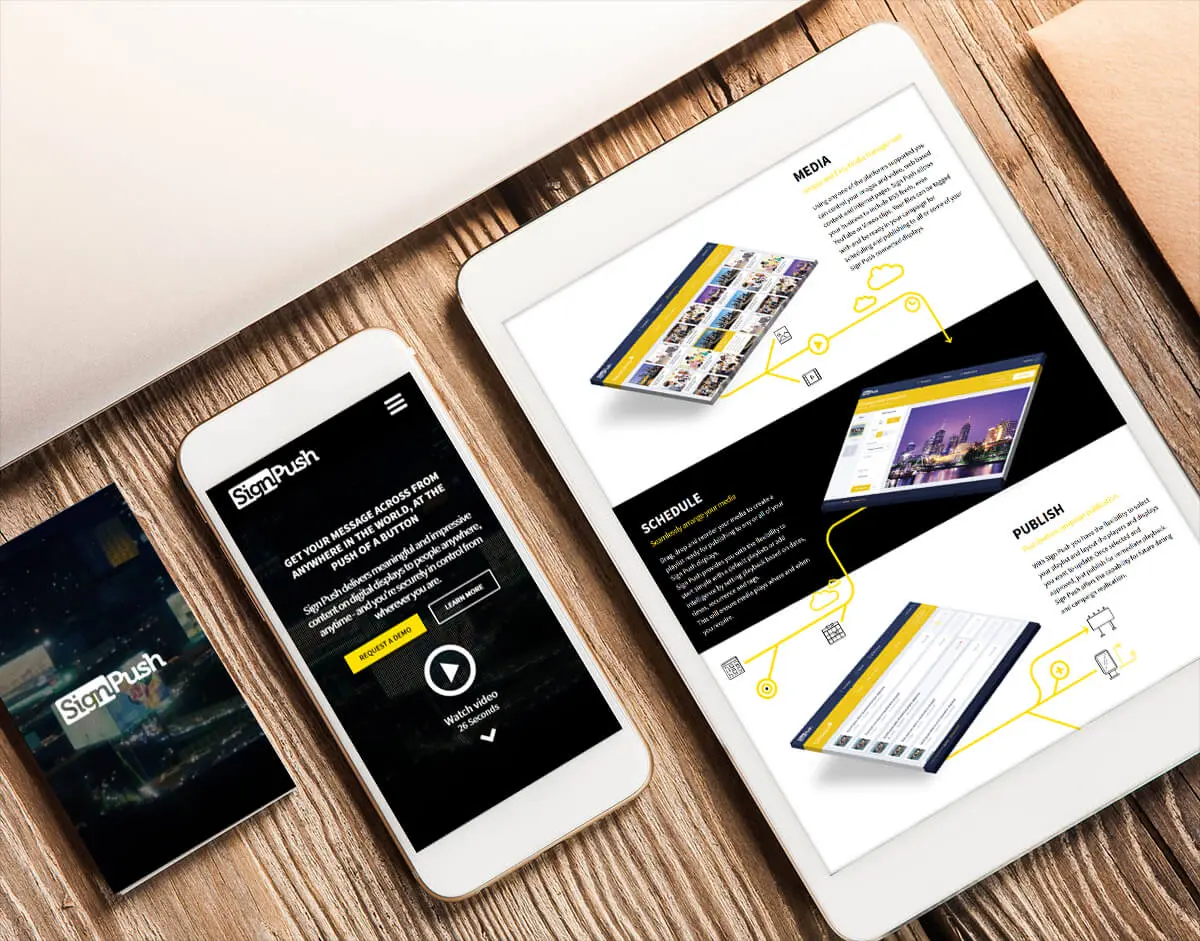
Responsive web design should be treated as standard, not a bonus. Many potential customers will first visit from a phone while commuting, comparing providers, or searching for something urgent. If buttons are too small, pages are slow, or text is hard to read, the business may lose enquiries before the visitor ever sees the full offer.
A professional build should also make the site easier to manage. Depending on the business, that may involve WordPress, Shopify, Squarespace, Wix, or another content management system. The best choice depends on what you need to update, whether you sell online, how much flexibility you want, and who will maintain the site after launch.
Choosing the right platform for your business
The platform behind your website affects cost, flexibility, maintenance, and long-term control. There is no single best option for every Melbourne small business. A simple service business, an online store, and a growing corporate brand may all need different systems.
Here is a practical way to think about common options:
| Platform type | Often suits | Key consideration |
|---|---|---|
| WordPress | Service businesses, blogs, flexible marketing sites | Highly adaptable, but needs updates and proper maintenance |
| Shopify | Retailers and product-based businesses | Strong e-commerce features, with ongoing app and subscription considerations |
| Squarespace | Simple brochure-style sites | Easy to manage, but less flexible for complex requirements |
| Wix | DIY-friendly small websites | Convenient for simple sites, but scalability should be considered early |
| Custom or hybrid builds | Complex workflows, corporate sites, advanced integrations | More tailored, usually requiring stronger technical support |
A web design agency should explain platform trade-offs in plain English. If you only need a neat five-page website, you may not need an over-engineered system. If you plan to publish content, run campaigns, add locations, or sell products, it is better to plan for that early.
How do you balance affordability with quality?
You balance affordability with quality by defining what the website must achieve now, what can wait, and what should be built properly from the beginning. A smaller first website can still be professional if it has clear messaging, mobile-friendly layouts, secure hosting, essential SEO foundations, and a reliable content management setup. Cutting corners on structure, ownership, performance, or support is usually where “cheap” becomes expensive later.
Small businesses often compare web design services by price alone, but inclusions matter more than the headline figure. One provider may include copy guidance, responsive design, contact form setup, analytics, and basic training. Another may charge separately for each item. Before choosing a package, ask what is included in planning, design revisions, page creation, CMS setup, launch support, hosting, security, and future edits.
A practical starter website might include a homepage, about page, core service pages, contact details, and a simple enquiry form. A more developed site may add location pages, blog content, case studies, booking tools, e-commerce, or email marketing integrations. The right package should match the stage of your business rather than push features you do not need.
Corporate needs require stronger structure
While small business websites often focus on speed, clarity, and local lead generation, corporate web design usually has more layers. Larger organisations may need to speak to several audiences at once, such as customers, partners, investors, job seekers, and internal stakeholders. That makes content hierarchy and navigation especially important.
A corporate site should help users self-select quickly. For example, a visitor looking for services should not be forced through investor content, and a potential employee should not have to search through product pages to find careers information. Clear menus, audience pathways, landing pages, and credibility-building sections help keep the experience calm and purposeful.
This is where professional web design becomes strategic. Testimonials, case studies, leadership information, resource libraries, forms, and conversion points all need to be organised in a way that supports trust without overwhelming visitors. Even if your business is not corporate yet, planning your website with future growth in mind can prevent messy rebuilds later.

What support should continue after launch?
After launch, a business should expect support that keeps the website secure, current, and useful. At a minimum, this may include software updates, backups, uptime monitoring, security checks, small content edits, and help when something breaks. Ongoing support is not just technical housekeeping; it protects the investment you made in the website.
Websites are not static brochures. Services change, staff change, offers change, and search behaviour changes. A site that is ignored for too long can become outdated, slower, less secure, or less persuasive. Regular maintenance gives you a chance to improve pages, add fresh content, review enquiries, and adjust calls to action based on what users actually do.
Before committing to a provider, ask these support questions:
- Who owns the website, domain, content, and accounts? You should know what you control if you change providers later.
- What maintenance is included? Clarify updates, backups, monitoring, security, and plugin or app management.
- How are content changes handled? Some businesses want training; others prefer a support team to manage edits.
- What happens if the site goes down? Response expectations should be clear before there is an urgent issue.
- Can the site grow? Ask how new pages, landing pages, integrations, or e-commerce features would be added.
These questions help avoid hidden costs and make the working relationship smoother.
A simple checklist before hiring a web design agency
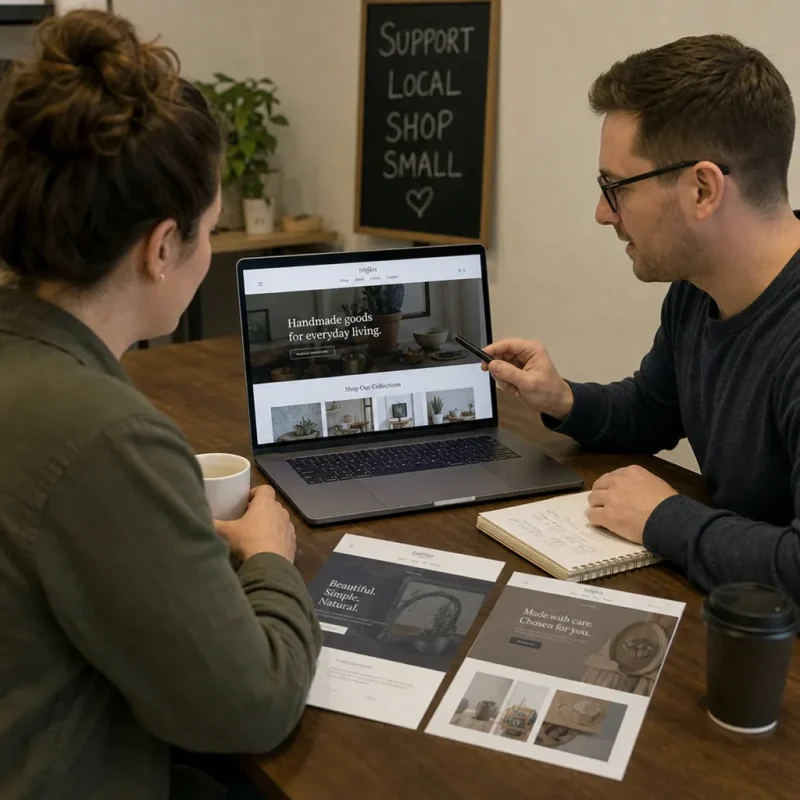
Choosing a web design agency is easier when you compare process and fit, not just visual style. A good partner should be able to explain how they move from discovery to design, development, launch, and support. They should also ask about your customers, goals, services, competitors, and internal capacity to manage the site.
Use this checklist before you decide:
- Review whether their past work feels clear, modern, and easy to use.
- Ask how they approach responsive web design across mobile, tablet, and desktop.
- Confirm whether SEO basics are included in the site structure.
- Understand what content you need to provide and what help is available.
- Check whether training or documentation is included.
- Clarify hosting, maintenance, security, and support responsibilities.
- Make sure pricing, timelines, revisions, and ownership are clearly explained.
- Choose a team that communicates simply and does not hide behind jargon.
The right agency should make you feel more confident, not more confused. If the process is unclear before you sign, it may become more frustrating once the project begins.
The takeaway for Melbourne small businesses
A small business website should be practical, professional, and built around the way customers make decisions. Strong website design Melbourne support brings together local insight, custom web design, responsive layouts, SEO-ready foundations, and reliable post-launch care. Whether you are launching your first site or replacing one that no longer reflects your business, focus on clarity, usability, ownership, and long-term value.
Affordable web design services can still deliver quality when the scope is well planned and the essentials are handled properly. Start with what your customers need to understand, what action you want them to take, and what support you will need after launch. From there, a thoughtful Melbourne web design partner can help turn your website into a stronger, more dependable part of your business growth.